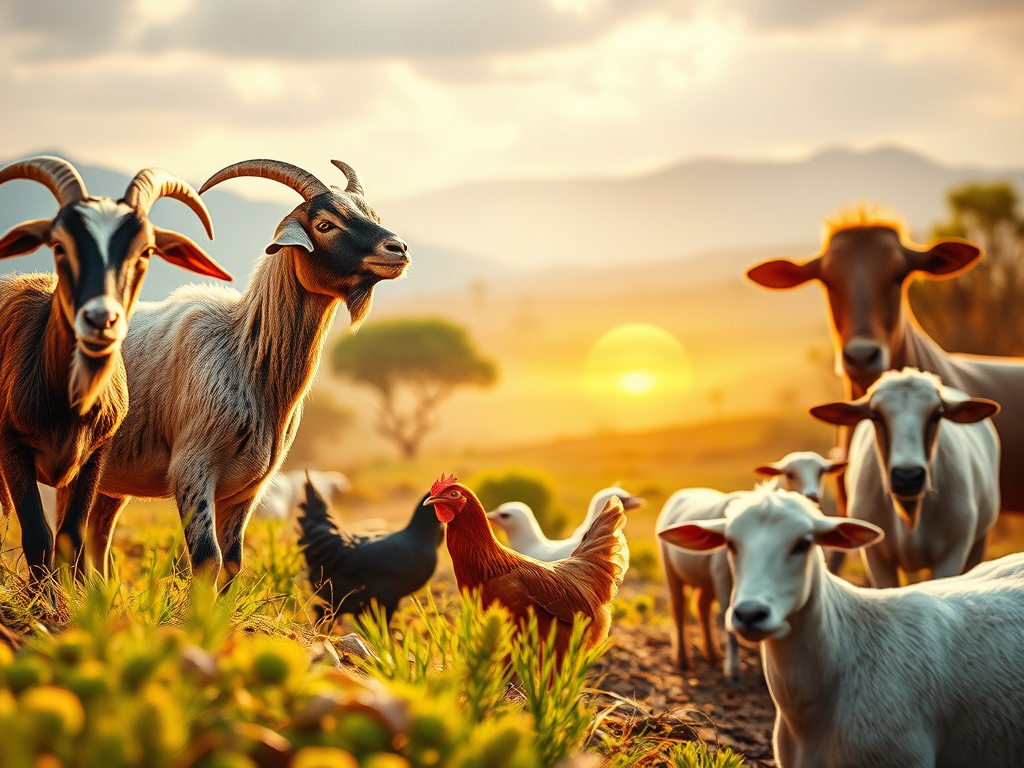
Choosing the right type of livestock farming for your location can be the difference between success and failure in agribusiness. Factors like climate, available resources, market demand, and personal interests all play a role in determining which livestock farming venture will thrive in your area. This quiz will help you figure out the best type of livestock farming for your specific location, whether you’re in Nigeria or another part of Africa. Answer the following questions to discover the ideal livestock farming option for you.
Question 1: What is the primary climate in your region?
A. Hot and dry
B. Humid and wet
C. Temperate with mild seasons
D. Arid and semi-desert
- A: Goats or camels may be ideal for your location, as these animals are well-adapted to hot and dry conditions. Goats, in particular, are resilient and require minimal water.
- B: Poultry farming, such as broilers and layers, would work well in humid areas. Chickens are easier to manage with proper ventilation systems and thrive in such climates.
- C: Cattle farming (both dairy and beef) is ideal for temperate areas with mild seasons. These animals require moderate weather and grazing pastures.
- D: Sheep and camel farming can thrive in arid or semi-desert conditions. Both animals are hardy and can survive on low-quality grazing.
Question 2: How much land do you have available for farming?
A. Less than 1 acre
B. 1 to 5 acres
C. 5 to 10 acres
D. More than 10 acres
- A: With limited land, poultry farming is a great option. Chickens, quail, or rabbits require minimal space, and intensive management allows for efficient production.
- B: With 1 to 5 acres, you could consider small-scale goat farming or fish farming. These ventures allow for moderate land use and high returns.
- C: With more land, consider dairy farming or raising sheep. Both require pasture, but the land size can support grazing and supplementary feed.
- D: With more than 10 acres, cattle farming, especially for beef production, or large-scale pig farming may be ideal. These ventures require significant space for free-ranging or structured pens.
Question 3: What is the availability of water in your location?
A. Scarce
B. Sufficient but not abundant
C. Reliable water source year-round
D. Excessive rainfall
- A: If water is scarce, consider livestock that requires less water, such as goats or camels. These animals are better suited for water-limited environments.
- B: For areas with moderate water, pig farming or small-scale dairy farming could be feasible. Both need regular water but don’t require vast amounts.
- C: With a reliable year-round water supply, you can explore fish farming, as it requires constant water. Poultry farming also benefits from consistent water availability.
- D: In regions with excessive rainfall, poultry or pig farming can work well with proper drainage systems. These animals can thrive with well-managed water levels.
Question 4: What is the demand for livestock products in your local market?
A. Meat (broilers, goats, beef)
B. Eggs and dairy
C. Specialty livestock (quail, rabbits, snails)
D. Organic or free-range products
- A: If meat is in high demand, consider broiler chicken or goat farming, as both provide quick returns and are popular in Nigerian and African markets.
- B: If your local market favors eggs or dairy, layers or dairy cows are the best options. Layers provide consistent egg production, while dairy cows produce milk for daily sales.
- C: If your market prefers specialty livestock, look into quail, rabbits, or snails. These niche markets are gaining popularity, especially in urban areas.
- D: If organic or free-range products are in demand, consider organic poultry or free-range goat farming. These are emerging markets with high profit potential.
Question 5: How much initial capital are you willing to invest?
A. Less than ₦500,000
B. Between ₦500,000 and ₦1,000,000
C. Between ₦1,000,000 and ₦5,000,000
D. More than ₦5,000,000
- A: With less capital, start with quail farming or rabbit farming. These ventures are affordable to start and offer good returns in a short time.
- B: With a medium budget, broiler chicken farming or small-scale goat farming is feasible. These options provide steady income without requiring large upfront investments.
- C: For larger investments, consider dairy farming or pig farming. Both have higher startup costs but offer excellent long-term returns with proper management.
- D: With more than ₦5,000,000 to invest, you could venture into large-scale cattle farming (beef or dairy) or extensive fish farming. These ventures require significant capital but promise substantial profits.
Conclusion: What’s Your Best Livestock Farming Option?
If you answered mostly A, goat farming or quail farming may be your best bet, offering low-cost and low-maintenance livestock farming options. If you answered mostly B, you might consider poultry farming, which is lucrative and adaptable to a wide range of environments. Those who answered C should explore dairy farming or pig farming to meet local demand. For mostly D responses, large-scale cattle farming or fish farming is likely the most profitable option, with the potential for significant returns.
Choosing the right type of livestock farming for your location can lead to high profitability, sustainable practices, and a strong foothold in your local market. By focusing on the factors highlighted in this quiz—land, water, market demand, and investment—you can ensure success and growth in Nigeria’s thriving agribusiness sector.