It is May 29th 2025, and President Bola Ahmed Tinubu has officially spent two years at the helm of Nigeria’s leadership. As agribusiness stakeholders, we owe it to ourselves—and the millions of farmers, processors, traders, and consumers who make up the value chain—to ask a simple but pressing question: has the Tinubu administration truly advanced agriculture in Nigeria, or are we merely admiring policies without progress?
The Policy Promises: Big Vision, Bold Moves
Let’s give credit where it’s due. One of the first major acts from the Tinubu administration was to declare a state of emergency on food security. It wasn’t just symbolic—the Ministry of Agriculture was renamed the Ministry of Agriculture and Food Security, signaling an intent to focus squarely on what was becoming a national crisis: food availability and affordability.
Backing this intent was a ₦100 billion Agricultural Development Fund, designed to address the perennial financing woes that have crippled smallholder farmers for decades. The president also launched a Dry Season Farming Initiative, with $134 million in financing from the African Development Bank, targeting 500,000 hectares for the cultivation of some arable crops.
Then came efforts to modernize the system. Nigeria signed a deal with John Deere to deliver 2,000 tractors annually over five years. There was also the ambitious Green Imperative Programme with Brazil—a $1 billion mechanization partnership aimed at equipping farmers and building capacity.
On paper, all these look like the most agriculturally assertive presidency in recent times. But as those in the trenches of agribusiness know, intentions don’t plant maize or process poultry—implementation does.
The Reality on Ground: Policies Versus Ploughs
So, how has this policy wave translated into real outcomes?
To be frank, the needle has moved—but only slightly. Many smallholder farmers still operate with hoes and cutlasses. The 10,000 tractors promised under various schemes are a welcome start, but Nigeria needs closer to 70,000 tractors to truly mechanize at scale. Many of those distributed so far are still concentrated in politically connected hands, not in the communities where they’re most needed.
Access to credit also remains a bottleneck. The ₦100 billion fund, while a step forward, hasn’t yet broken the vicious cycle of collateral requirements, delayed disbursements, and high-interest lending. Farmers in rural Oyo, Kebbi or Nasarawa are not necessarily feeling this “financial inclusion.”
And perhaps most urgently, insecurity continues to haunt the sector. From Zamfara to Benue, banditry has pushed farmers off their land. For a country already grappling with food shortages, this is catastrophic. You can have the best tractors in the world—but they cannot work in no-go insecure communities.
Tinubu’s Economic Reforms: A Double-Edged Sword for Agribusiness
President Tinubu’s broader economic reforms—namely the removal of fuel subsidies and the floating of the naira—were aimed at stabilizing the macroeconomy. But for agribusiness, the short-term pain has been intense.
Transportation costs have skyrocketed. Fertilizer and feed prices have surged. Food inflation reached a staggering 40.5% in April 2024. While market liberalization might make sense for economists, many in agribusiness feel like they have been left to swim without life jackets.
The lifting of the import ban on staples like rice and maize has also sent mixed signals. Yes, it was meant to curb rising food prices. But at what cost? Local producers now face competition from cheaper imports, threatening to reverse the modest gains made in local production over the past decade.
The Numbers: Progress or Plateau?
Let’s talk numbers. Agriculture contributed 25.59% to GDP in late 2024. That sounds impressive—until you dig deeper. The sector grew by just 1.76% in Q4 2024. For a country where over 60% of the population depends on agriculture, this is disappointing.
Worse still, budgetary allocations remain far below global benchmarks. In 2024, the sector received ₦362.94 billion, just 1.32% of the national budget. Compare that to the 10% target under the Maputo Declaration, and it is clear we are still underinvesting in the engine room of our economy.
Agro-processing? Still underwhelming. Value addition? Minimal. Most of our exports are raw. We are not feeding our industries—we’re exporting opportunity.
So, What Next?
Nigeria’s agribusiness sector does not lack potential—it lacks consistency. President Tinubu’s team has laid some policy foundations. But unless we fix insecurity, stabilize the policy environment, and aggressively scale up irrigation, extension services, and infrastructure, the dream of food security will remain just that: a dream.
The future of Nigeria’s agriculture should be less about press briefings and MOUs, and more about metrics that matter: hectares farmed, yields improved, incomes raised, and food prices lowered.
We need a clear, well-funded national plan that integrates climate resilience, private sector incentives, rural infrastructure, and real federal, states and local government collaborations.
Until then, the agribusiness community will continue to watch, wait—and hustle—while policy makers debate.
President Tinubu has stirred the waters. The challenge now is to sail the boat—not just keep bailing it out.



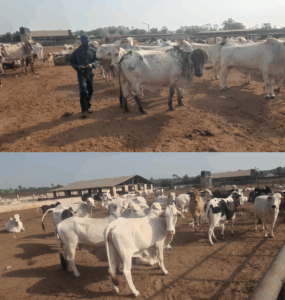
This is a concise detail of the activities of agribusiness in the federal republic of Nigeria led by the almighty President Bola Ahmed Tinubu. We need progressive numbers, not the plateau!