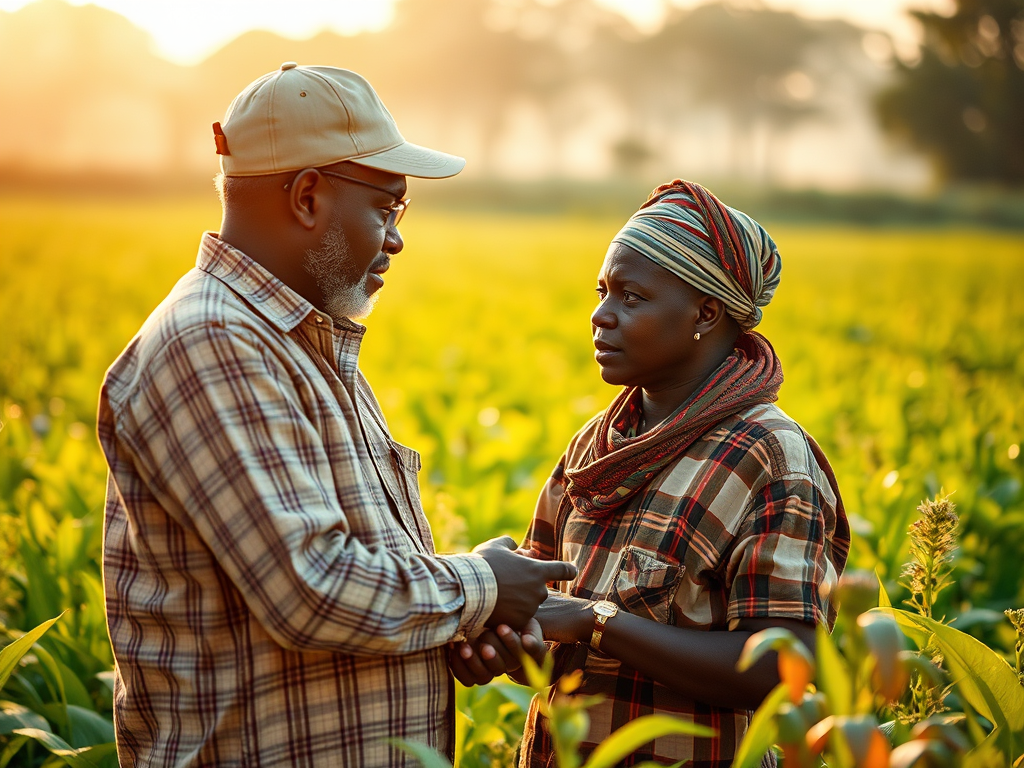
Food security is a critical issue in Africa, where agricultural productivity is essential for feeding the continent’s rapidly growing population. Nigeria, the most populous African nation, grapples with food insecurity, yet its vast agricultural potential remains untapped. Agricultural extension services provide a crucial link between research and the farmers who produce the continent’s food supply. By focusing on poultry, livestock, and crop production, extension services help ensure food security in Nigeria, which in turn impacts the rest of Africa. This article explores how extension services play an essential role in improving agriculture and food security.
The Role of Agricultural Extension Services
Agricultural extension services are designed to educate farmers on the latest farming techniques, innovations, and solutions to challenges they face. These services are typically delivered by trained extension officers who work directly with farmers, providing them with practical information on managing crops, poultry, and livestock more efficiently. The impact of these services is multifaceted, influencing not only food production but also economic growth and environmental sustainability.
Enhancing Poultry Production
Poultry farming plays a crucial role in Nigeria’s food security by providing affordable protein sources. However, many poultry farmers face challenges like disease outbreaks, improper feeding techniques, and poor biosecurity practices. Extension services help farmers manage these issues by teaching modern poultry management strategies, including vaccination schedules to prevent diseases like Newcastle disease, improved hatchery techniques, and optimal feed formulation practices. By improving these key areas, poultry farmers can increase productivity, providing more meat and eggs to local markets.
Boosting Livestock Farming
Livestock farming is another pillar of food security in Nigeria, providing both food and income to millions of smallholder farmers. Extension services are critical in educating farmers on best practices in animal husbandry, such as disease management, proper breeding techniques, and sustainable feeding strategies. For instance, extension officers offer advice on grazing management to preserve pastureland and introduce vaccination programs to prevent common diseases like Foot-and-Mouth Disease. This support leads to healthier livestock, better yields of meat, milk, and other products, and overall improved food availability.
Improving Crop Production
Nigeria’s crop production faces significant challenges, including soil degradation, climate change, and pests. Extension services address these challenges by introducing farmers to sustainable agricultural practices such as crop rotation, integrated pest management, and the use of high-yield, drought-resistant crop varieties. Farmers also receive training in conservation tillage and irrigation techniques, which are essential for improving crop yields. The adoption of these techniques allows farmers to produce more food consistently, even under adverse conditions, thereby enhancing food security.
Bridging the Gap Between Research and Farmers
Extension services are crucial in translating agricultural research into practical applications for farmers. Institutions like the International Institute of Tropical Agriculture (IITA) and the National Animal Production Research Institute (NAPRI) in Nigeria develop new farming technologies, but these innovations often don’t reach farmers without effective extension services. Extension officers ensure that farmers have access to drought-resistant seeds, climate-smart farming practices, and improved livestock breeds. This bridge between research and real-world application enables farmers to increase their productivity and resilience to changing environmental conditions.
Facilitating Access to Markets
Beyond improving production, extension services also help farmers access market information and opportunities. Many Nigerian farmers, especially in rural areas, struggle to find buyers or sell their products at fair prices due to lack of market knowledge. Extension officers provide critical market linkages, educating farmers on current market trends, demand, and pricing. This empowers farmers to sell their produce, whether it’s eggs, meat, or crops, at competitive prices, enhancing their income and contributing to the economic aspect of food security.
Mitigating Climate Change Effects
Climate change poses a significant threat to food security across Africa, and Nigeria is no exception. Erratic rainfall patterns, prolonged droughts, and rising temperatures all affect poultry, livestock, and crop production. Extension officers work with farmers to implement climate-smart agriculture techniques such as improved water management, soil conservation, and the use of resilient crop varieties. By adopting these practices, farmers can better manage the impacts of climate change, ensuring more stable and reliable food production in the face of environmental challenges.
Promoting Biotechnology in Agriculture
Nigeria has made strides in agricultural biotechnology, which is essential for improving productivity in both crop and livestock farming. Extension services are vital in educating farmers about the safe and effective use of genetically modified crops and animal breeds that are resistant to diseases and pests. With biotechnology, farmers can grow crops that withstand extreme weather conditions and rear livestock that are more productive, leading to increased food output and reduced reliance on imported food items.
Extension services influence poultry, livestock, and crop production, providing essential solutions to food security challenges in Nigeria. However, there are a number of challenges that need to be overcome. The next article examines the way forward for extension services in Nigeria.