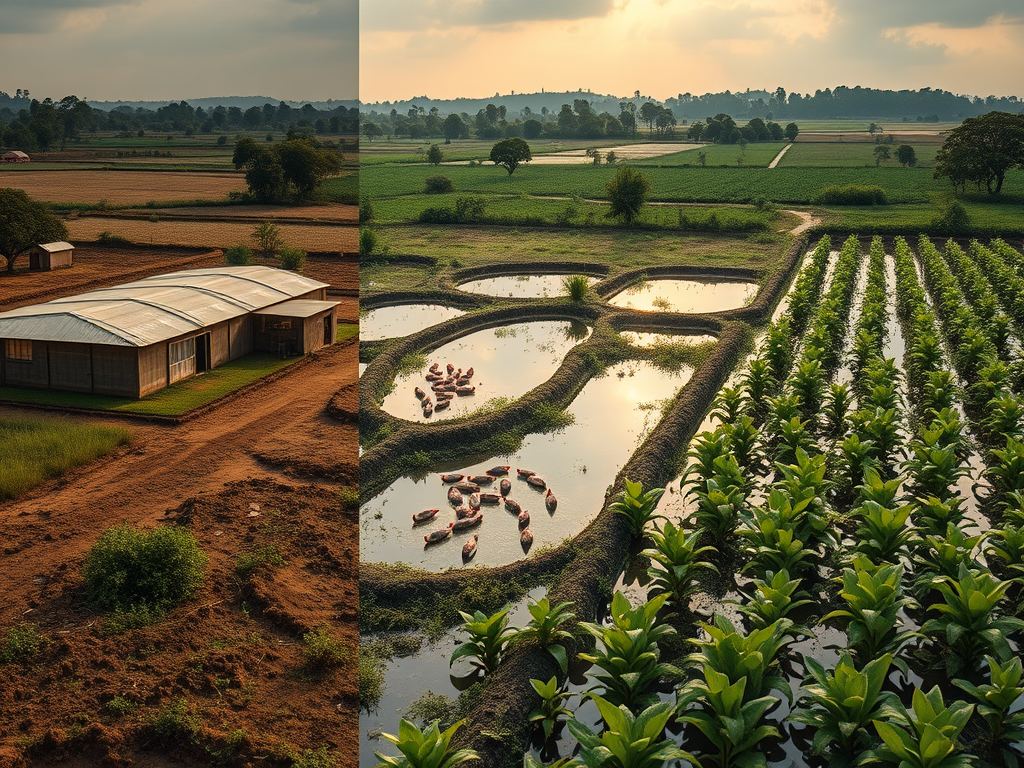
Agribusiness investment in Nigeria is booming, offering incredible opportunities for wealth creation and food security. But it’s also filled with landmines. Many investors, including professionals and returnees from the diaspora, have lost millions not because of fraud, but due to common mistakes in agriculture—errors that could have been avoided with better knowledge and guidance. In this article, we explore three real-life agribusiness failures and extract critical lessons that can help you make smart, sustainable investment decisions.
Case Study 1: Poultry farming investment with incorrect housing orientation
A multimillion Naira poultry farm with about 35,000 laying hens located somewhere in Ogun state Nigeria. The project was equipped with top-tier battery cages. But due to poor design, all poultry houses were wrongly oriented, exposing nearly 50% of the birds to direct sun at sunrise and sunset. The result? Heat stress and reduced productivity. The birds struggled, and daily egg production never rose above 65% in spite of all the efforts —far from the 80–90% standard.
What Went Wrong:
- No expert input on housing orientation.
- Sun path and airflow were ignored during construction.
What You Should Do:
- Align poultry houses East-West to reduce direct sun exposure.
- Hire experienced poultry consultants before construction begins.
- Conduct a microclimate assessment to understand site-specific conditions.
Case Study 2: Fish Farming on a Flood-Prone Plain
This fish farming business was launched using earthen ponds located in a known floodplain. Each rainy season, the area gets heavily flooded and sometimes wash away tons of fish stock, damaging pond structures, and leading to massive financial losses.
What Went Wrong:
- Poor land selection without environmental analysis.
- Lack of flood control measures.
What You Should Do:
- Avoid flood-prone lands or invest in concrete ponds or recirculating aquaculture systems (RAS).
- Build embankments and drainage to manage excess water.
- Consult environmental engineers before establishing a fish farm.
Case Study 3: Ginger Farming on Waterlogged Land
This large-scale ginger farming in a place called Imota, in Lagos state Nigeria had very extensive modern irrigation system and top-quality inputs. However, it was sited on humid, poorly drained land, leading to rhizome rot and extremely low yields. Despite several millions of Naira invested, the projected harvest never materialized.
What Went Wrong:
- Wrong land choice for ginger.
- Expensive infrastructure installed without agronomic compatibility.
What You Should Do:
- Ginger prefers well-drained loamy soil, not soggy conditions.
- Conduct soil tests and land suitability studies.
- Align crop choice with ecological conditions instead of forcing high-tech fixes.
General Advice for Agribusiness Investors
No matter the enterprise—whether it’s poultry farming, fish production, or cash crops like ginger—the following steps are essential for success:
1. Before You Invest:
- Perform feasibility studies and market research.
- Consult experts in your chosen value chain.
- Assess land, water, climate, and infrastructure needs.
2. During the Investment:
- Use the right materials, technologies, and farm layouts.
- Supervise contractors closely and track spending.
- Always follow best agronomic and livestock practices.
3. After Setup:
- Track productivity with reliable data.
- Monitor for early warning signs of disease or inefficiency.
- Stay agile—be willing to adapt based on what the farm data tells you.
Final Thoughts: Turn Mistakes into Smart Moves
Every failed farm is a lesson waiting to be learned. These case studies reveal that agribusiness investment in Nigeria demands more than capital—it requires technical precision, professional guidance, and local knowledge. If you’re considering entering this space or growing your portfolio of profitable agribusiness ideas, remember: success lies in the details. Learn from others, invest wisely, and always validate your assumptions before pouring in your resources.
Stay informed, avoid costly errors, and grow profitably.
Visit agribusinessspace.com for more practical tips on how to succeed in agribusiness across Nigeria and Africa. Let us have your comments and questions too



On point