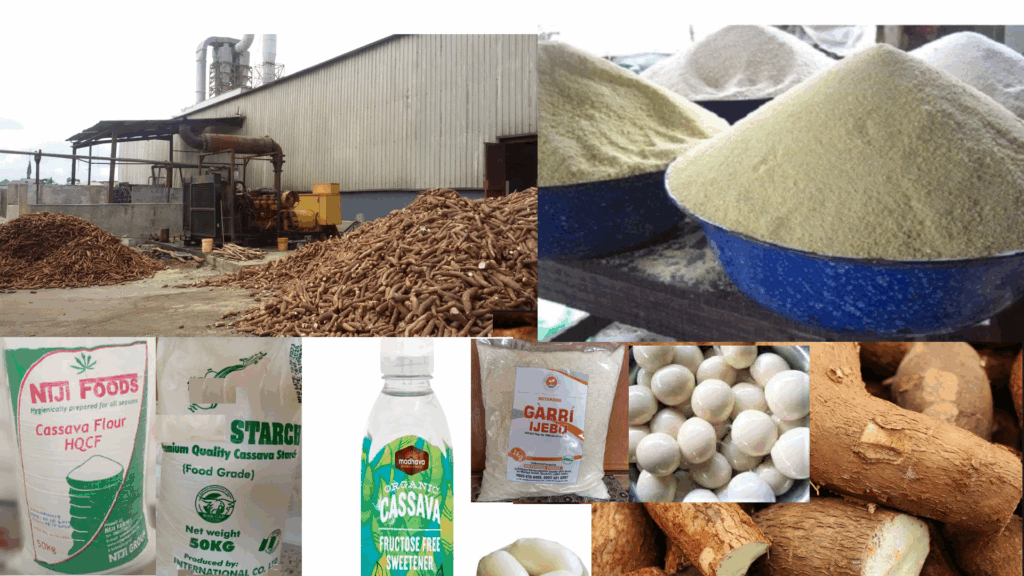
Cassava holds immense significance across Nigeria and Africa due to its versatile roles as both a staple food and an industrial raw material. Statistics indicate that Nigeria alone produces over 59 million metric tons annually, making it the world’s largest cassava producer. However, this versatility has ignited a critical debate: Should cassava primarily serve as food or be prioritized as an industrial commodity? Achieving the right balance is pivotal for ensuring food security, stimulating economic growth, and promoting sustainable agricultural development.
Cassava as a Staple Food
Cassava remains an essential food source, nourishing over 500 million people in Africa daily. In Nigeria, traditional dishes such as Garri, Fufu, Lafun, and Tapioca depend heavily on cassava as primary raw material , making it a cornerstone of local diets. The affordability and high carbohydrate content of cassava make it indispensable in addressing food shortages and combating malnutrition, especially in poorer communities.
Promoting cassava cultivation specifically for food security provides stable nutrition, particularly for vulnerable rural and urban populations. Cassava’s resilience to drought, poor soils, and climate fluctuations make it uniquely suited as a food security crop, effectively reducing the risk of widespread food shortages during adverse climatic events.
Cassava as an Industrial Commodity
Conversely, cassava holds substantial industrial potential. Its applications extend to ethanol production, animal feed, pharmaceuticals, textiles, and bio-based plastics, highlighting its economic versatility.
Nigeria has seen remarkable growth in its cassava processing industries, generating employment and boosting local economies. Psaltry International Limited in Oyo State, for instance, has significantly innovated by adopting advanced processing technologies, producing premium-quality cassava starch that meets stringent international standards, illustrating cassava’s substantial economic promise.
Finding the Right Balance
Maintaining food security while optimizing cassava’s industrial potential requires careful strategic planning. Policymakers must clearly demarcate zones for food-grade cassava production separate from those for industrial processing to ensure neither objective compromises the other.
For instance, dedicated industrial cassava farming zones could be established in less densely populated regions to avoid competition with areas critical for food production. Supporting smallholder farmers through modern agricultural technology, practical training, and financial assistance ensures sustainable production for both sectors.
Policy Recommendations
Successfully balancing cassava use requires coordinated action between government and industry stakeholders, including:
- Promoting Agricultural Research and Development: Significantly invest in breeding programs aimed at developing high-yield, disease-resistant cassava varieties capable of meeting demands for both food and industrial uses.
- Improving Infrastructure: Upgrading rural infrastructure, such as road networks and storage facilities, to minimize post-harvest losses and facilitate efficient market access.
- Market Regulation: Implement fair pricing policies to protect farmers’ livelihoods, ensure affordability for consumers, and provide a stable industrial supply.
Ghana offers a robust example of successfully implemented balanced cassava usage policies. Through partnerships between government agencies, the private sector, and international organizations like IFAD and FAO, Ghana has established clear agricultural zones dedicated to food and industrial purposes, showcasing an effective model of cassava utilization.
Nigeria’s Cassava Bread Policy represents another pragmatic approach. Initiated in 2012, the policy integrates cassava flour into bread production, creating a substantial market for cassava farmers, thereby reinforcing both food security and industrial-scale cassava processing.
Conclusion
The ongoing discourse surrounding cassava’s multifaceted roles underscores the urgent necessity for balanced and visionary agricultural policies. To fully harness cassava’s immense potential, it is crucial for Nigeria and other African nations to strategically prioritize innovation, adopt sustainable cultivation practices, and enhance value-chain development. Such proactive measures will not only solidify cassava’s critical role in ensuring food security but also catalyze significant industrial expansion, job creation, and improved livelihoods. Ultimately, thoughtful management of cassava production and utilization can lead to lasting economic transformation, empowering rural communities and driving inclusive growth across Africa’s agricultural landscape.



I enjoy reading your article on a regular basis. Keep up the good work!
Thank you.