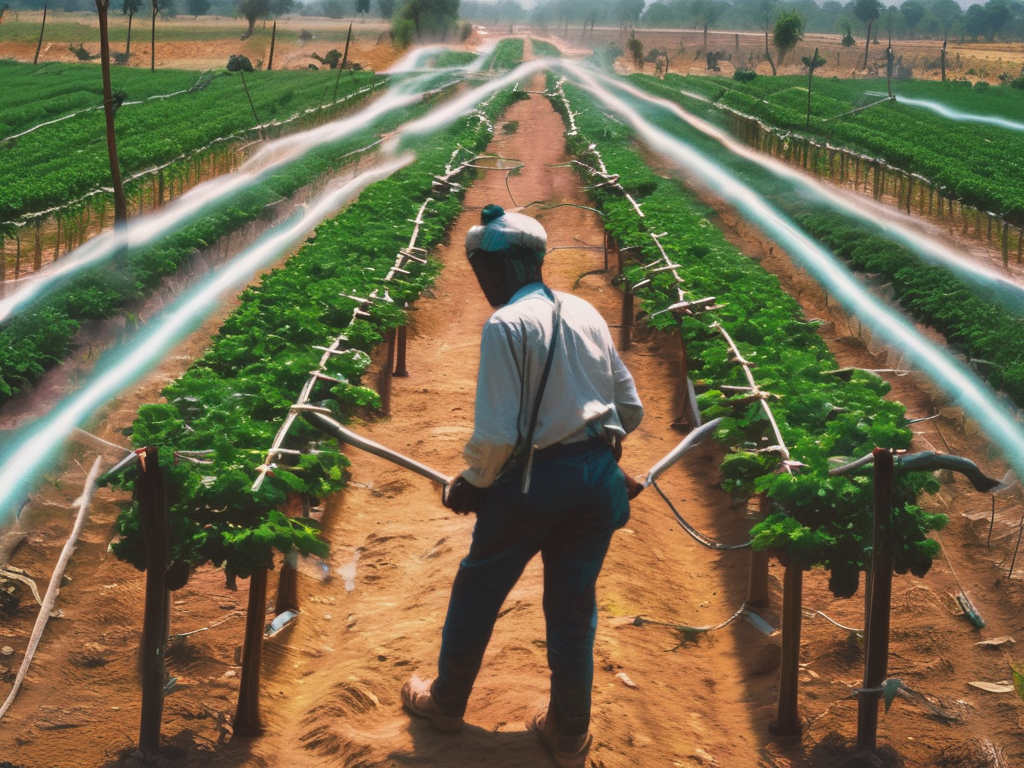
Agriculture remains the backbone of many economies in Africa, but challenges like erratic weather patterns, soil degradation, and limited access to modern farming technologies continue to hinder its full potential. Enter Israel, a small nation renowned for transforming its arid landscape into a green oasis through groundbreaking agricultural innovations. These Israeli technologies and practices are now being applied in Africa, offering valuable lessons and driving a revolution in the continent’s agricultural sector.
Drip Irrigation: Precision in Water Usage
One of Israel’s most celebrated innovations is drip irrigation, a technology that delivers water directly to plant roots, minimizing waste and maximizing efficiency. This method has been a game-changer for farmers in arid and semi-arid regions of Africa, where water scarcity is a critical issue.
In Kano State, the adoption of Israeli drip irrigation systems by local farmers has significantly boosted crop yields. The system has allowed farmers to grow crops even during dry seasons, ensuring food security and enhancing their incomes. Also in Kenya’s Turkana region, where water is scarce, the implementation of Israeli drip irrigation has enabled smallholder farmers to cultivate vegetables and fruits, transforming their livelihoods and providing fresh produce to local markets.
Greenhouses: Maximizing Yield and Quality
Israeli greenhouses are designed to create optimal growing conditions, regardless of external weather. These structures control temperature, humidity, and light, ensuring year-round cultivation of high-quality crops.
In Rwanda, the introduction of Israeli greenhouse technology has empowered farmers to grow tomatoes, cucumbers, and peppers with higher yields and better quality. This has not only improved food availability but also increased farmers’ incomes through premium produce. Ghanaian farmers in the Volta region have embraced Israeli greenhouse technology to cultivate export-quality vegetables. The controlled environment has reduced pest infestations and diseases, leading to healthier and more profitable crops.
Solar-Powered Innovations: Harnessing Renewable Energy
Israel’s expertise in solar energy has also made its way to Africa, offering sustainable solutions to power agricultural activities. Solar-powered irrigation systems, for example, provide a reliable and eco-friendly alternative to fuel-based systems. In Ethiopia’s Tigray region, solar-powered irrigation systems from Israel have revolutionized farming by providing consistent water supply without relying on costly and polluting diesel generators. This has increased agricultural productivity and reduced environmental impact. Also in Tanzania, the implementation of solar-powered cold storage units, inspired by Israeli technology, has helped farmers preserve their produce longer, reducing post-harvest losses and ensuring better market prices.
Agricultural Research and Development: Tailored Solutions
Israel’s commitment to agricultural research and development (R&D) has led to the creation of crops and farming practices specifically tailored to harsh climates. These innovations are being shared with African countries to improve local agricultural practices. In Zambia, Israeli-developed drought-resistant maize varieties are being cultivated to withstand erratic rainfall patterns. These crops have shown resilience in the face of climate change, ensuring food security for local communities. Nigeria too has benefited from Israeli expertise through partnerships in agricultural R&D, leading to the development of improved cassava and yam varieties that offer higher yields and better resistance to pests and diseases.
Conclusion
The application of Israeli agricultural innovations in Africa is transforming the continent’s farming landscape. From precision irrigation to advanced greenhouse technologies and solar-powered solutions, these innovations are addressing critical challenges and unlocking new opportunities for African farmers. By learning from Israel’s experience and embracing these technologies, African nations can enhance food security, increase agricultural productivity, and improve the livelihoods of millions of farmers. The success stories from Nigeria, Kenya, Rwanda, Ghana, Ethiopia, and Zambia are just the beginning, promising a brighter and more sustainable future for agriculture in Africa.
Join our community for more expert tips, product reviews, and exclusive insights into sustainable agribusiness practices! And you might be on the line to receive our free downloadable resources